
By: Leslie Kemp Poole
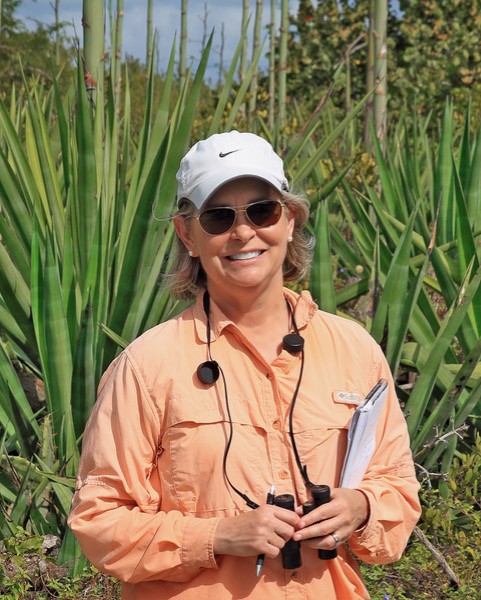
For more than 30 years I have roamed around Florida, books in hand, following the paths of those who have explored the sandy coasts, vine-tangled inlands, and meandering waterways that adorn the peninsula. My love of literature, history, and landscape has fueled these rambles, often with reluctant family or quizzical friends in tow. After all, we were viewing sites where Spanish conquistadors might have trudged or where renown author Stephen Crane came ashore after a shipwreck or the site where crews set forth to survey the mysterious Everglades.
How could they possibly not want to go?
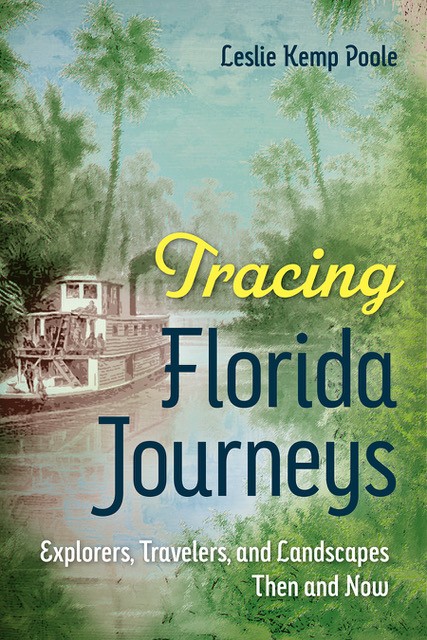
By the end of our ventures, I usually won over the skeptical and infused them with my enthusiasm. That became my inspiration for my 2024 book Tracing Florida Journeys: Explorers, Travelers, and Landscapes Then and Now. It documents eleven men and women who came through Florida over the span of five centuries and wrote extensively about it, enabling me to retrace their courses. Since its publication I’ve learned that I’m not the only person with a hankering to follow these tales. The interest with which it has been received (and awards) has made clear that many others enjoy such outings.
My inspiration for the book was two-fold.
When I was researching Florida literature for a class in Rollins College’s Master of Liberal Studies program, I fell in love with a chapter from Cross Creek by Marjorie Kinnan Rawlings. “Hyacinth Drift” documents a 1933 trip that Rawlings, a transplant from northern climes, and her Cracker friend Dessie Smith took on the St. Johns River. Rawlings, seeking refuge from writer’s block and an impending divorce, and Smith, always ready for adventure, took Smith’s wooden johnboat for ten days from Christmas to the Ocklawaha River to a final spot near Smith’s cabin. Granted, the idea for the trip was fueled by a night of moonshine drinking, but the reality of it became a very memorable story it which the women got lost and then found their way by observing nature.
For years I tried to find a woman to recreate the trip with me and when I finally did, it was a week to remember. My college friend and fellow journalist Heather McPherson proved to be good company and along the way, we met Dessie (still alive), heard her stories, and fell in love with Rawlings’ romantic, transcendental view of Florida nature. It was clear that Florida had changed much since the women’s trip, but there were still places where one could feel the same sense of awe and wonder.
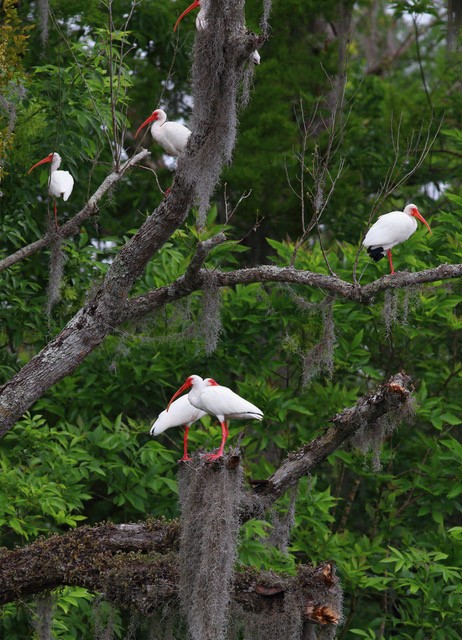
About the same time, I became friends with two seasoned Florida afficionados, Bill Belleville, and Clay Henderson, who decided I needed to get out into “real Florida.” Bill loved to duck through scrubby palmettos looking for small hidden springs and I joined him on many a hike that diverged from worn paths into thick underbrush. Clay loved to get out on waterways, often dangling a fishing line along the way. And they were both huge fans of William Bartram, a Quaker self-taught naturalist who made his way up and down the St. Johns River in 1773-74.
Bartram wrote about his experiences in a book (the shortened title is Bartram’s Travels) that captivated poets and writers of the era and today. So, of course, I became a Bartram fan too.
On at least three occasions Clay and I have ventured to a small rise along the St. Johns River where we have convinced ourselves that Bartram camped and fended off aggressive alligators. He called it Battle Lagoon for all the chaos he witnessed. We held copies of Bartram and read them aloud to confirm our suspicions and delight in his words.
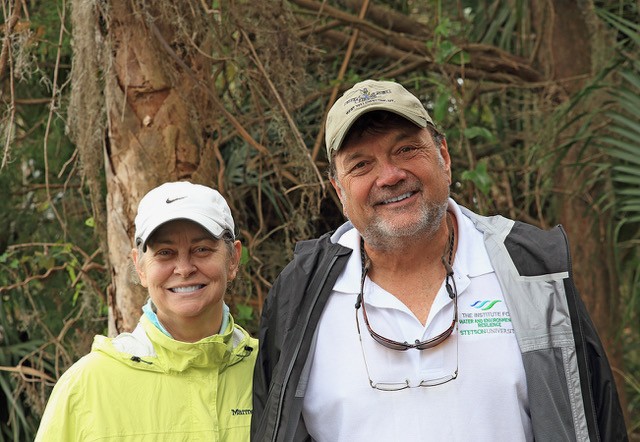
Over the years since then I learned about many, many more ventures into the state by such notables as John James Audubon, John Muir, Harriet Beecher Stowe, and Zora Neale Hurston. So when COVID hit and I had the time and need to get out of my bubble, I got on the road and followed their paths. It was the most fun I’ve ever had writing and researching a book, and I hope that it will inspire my readers to arise from their armchairs and see the wonders of Florida. By learning about these places and having their own adventures, perhaps they will grow to care about it and protect it.
Rawlings and Bartram would agree.