Part 1: When Paper Met Pixel
By Allison Crutchfield
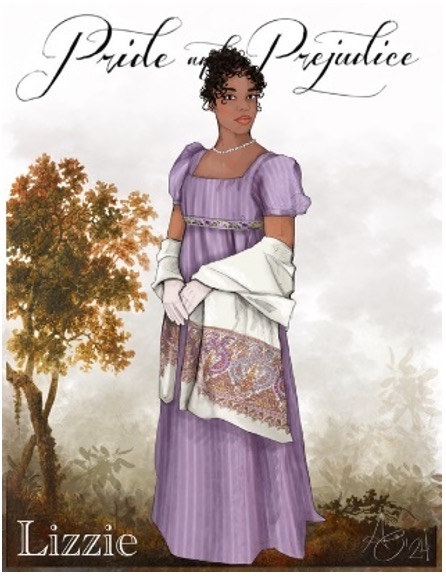
Those who know me off campus would be surprised by the title of this blog post. I’m Allison, an Artist in Residence in the Department of Theater and Dance, and I did not immediately embrace the rise of technology. I run the Costume Studio, and I’ve been a Costume Designer for over twenty years. Until just four years ago, I practiced my craft the “old school” way—paper, pens, ink, watercolor renderings—crafted with love, time, and plenty of mess.

But inspiration struck, as it so often does, by looking at the world through the lens of my students—and through a drawing app for iPad called Procreate. Seeing students embrace this new form of rendering, and desperately not wanting to be one of those professors left behind by advances in their field, I took a breath, held my nose, and gently waddled into the shallow end of the world of digital rendering.
Forgive the melodrama, but as we all know, trying something new is scary. I was lucky to have a supportive department chair Kevin Griffin who encouraged me to apply for a Course Development Grant so I could take a workshop with the United States Institute of Technical Theatre (USITT), led by Eric Abele, Senior Lecturer at the University of Maryland, and Lauren T. Roark, Head of Graduate Costume Design at the University of Tennessee, Knoxville.
After three days of intensive learning, I was hooked. Fully invested. In love. Falling into the deep end. This form of digital rendering had everything I wanted: a clear interface, tools I actually understood, exciting possibilities, and creative solutions.
Another supportive colleague in my department, Dr. Marianne DiQuattro, helped me harness this invigorating learning experience and turn it into something real for my students by pointing me toward another funding opportunity available to all full time faculty, the Faculty Instructional Technology Integration (FITI) Grant. At first her suggestion felt like an opposites-attract rom-com (did I mention I’m not the techie person?), but the more I read, the more I realized the FITI grant was a perfect fit.
The grant application was due in March, so I spent my winter break 2024 working on my FITI proposal. As I mapped out my vision, I realized I didn’t want this technology tucked away in just my department. I wanted it to be a resource for the whole campus. But I would need more funding to make this growing dream a reality. Every journey needs a fairy godmother, and mine appeared in the form of Derek Malone, Dean of our forward-thinking Olin Library. After hearing my pitch, Derek generously agreed to help cover the funding gap in exchange for an exhibit after the first course. This was an unbelievably easy ask; my students would not only learn how to use this tool, but they’d also have a venue to publicly share their work.
When I was awarded the FITI in late April I found out that it not only came with funding, but an entire project team to help me develop the course and meaningfully integrate the technology. Theatre is a collaborative art form. I love working in groups, but I had never planned a course collaboratively. My FITI team is a collaborative, supportive, energetic group of colleagues from different arms of campus support: Caitlyn Deeter, AI Technologist, Bill Svitavasky, Professor Olin Library, and Lucy Littler, Director of the Endeavor Center.
It didn’t take me long to realize I had a dream team supporting my vision. From the first meeting, I was overwhelmed and inspired by how thoughtful and excited everyone was about the topic. This group brought a variety of new perspectives on course content, scaffolding, class activities, and authentic assessments. We created learning outcomes that went past the mechanics of technology and into the heart of creative practice. From the first meeting it was clear they were as excited as I was, and that enthusiasm helped propel us forward. As we worked together over summer 2025, I saw what started out as a vague idea take shape into something so much more than I ever anticipated.
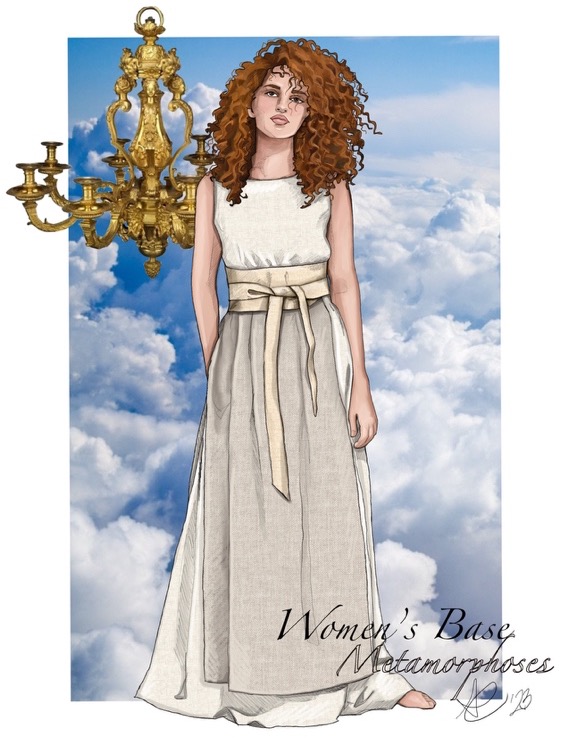
Among the many ideas shared during our planning meetings, a few stood out. Bill wove art history into a lesson on drawing circles, invoking Giotto and his legendary hand-drawn perfect circle. Lucy encouraged us to think bigger—not just about the mechanics of rendering, but about who these students are and how digital art might shape their creative lives. That spark became their final project, “The Artist of the Future.” Caitlyn introduced A.I., helping us design lessons on ethically generating imagery and transforming it into character renderings in Procreate. Cailyn and I closed the summer side by side in my office, sketching and testing projects together.
I hope my enthusiasm for this process is evident, as developing this course was truly one of the highlights of my summer. I will teach this grant-supported course during Winter Intercession 2026 and will update the ROLLINSpire audience with Part 2—when pixel meets student—in the new year
Are you interested in applying for one of the grants described in Allison’s post? Visit MyRollins: Office of Grants and Sponsored Research for more information.