By Phoenix Rogers, Assistant Professor of Biology
“This program has both reinforced my interest in scientific research and my understanding of conservationist strategies.”
That was how one student described the 12 days Dr. Paul Stephenson and I spent with 10 Rollins students in the Gulf of Maine this past July.
Their reflection captures something I came to appreciate over the course of the trip: when students leave the traditional classroom, the questions they study become harder to separate from the complicated world around them.
In Maine, marine biology was never only about marine biology.
When Places Becomes Part of the Curriculum
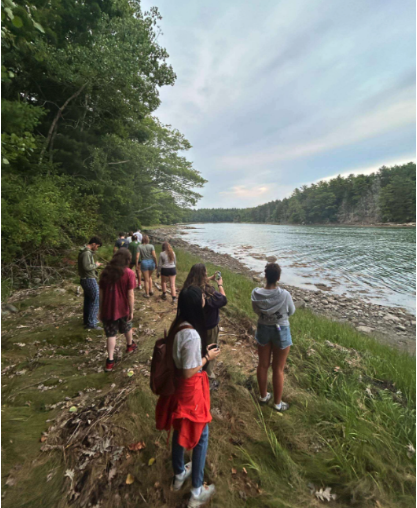
This field course has evolved over decades as Rollins faculty have worked to make it more accessible, educationally valuable, safe, and sustainable.
Dr. Fiona Harper began bringing students to the University of Maine’s Darling Marine Center, where she had conducted postdoctoral research. Fiona describes the rocky shores surrounding the center as the sites of “classic papers” in marine biology. Students who had encountered those places through research could now experience them firsthand.
That relationship between scholarship and place remains at the center of the course.
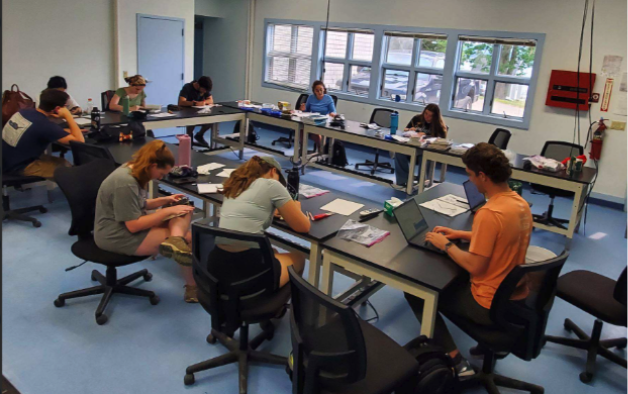
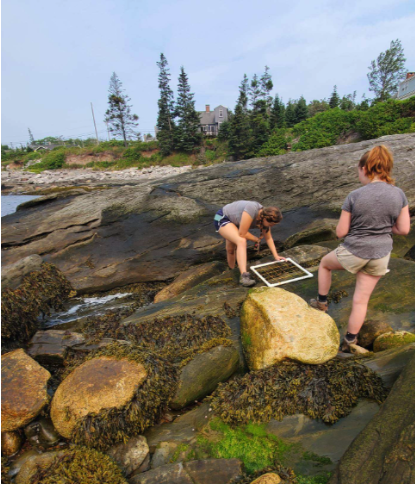
During the day, students sampled rocky shores and studied patterns in marine life. They also visited towns, farms, and aquariums that made it impossible to study the Gulf only as an ecological system. The ocean is deeply connected to the people and economies of Maine. Then, in the evenings, we read and discussed scientific papers related to what students had encountered that day.
The rhythm—field by day, papers by night—allowed experience and scholarship to inform each other. Questions about marine organisms quickly became questions about climate change, overfishing, conservation, economic livelihoods, and the communities that depend on the Gulf. Again and again, we returned to a difficult question: How do we protect these ecosystems while also supporting the people who depend on them? There was no simple answer, which was part of the point.
Finding Different Ways Into the Problem
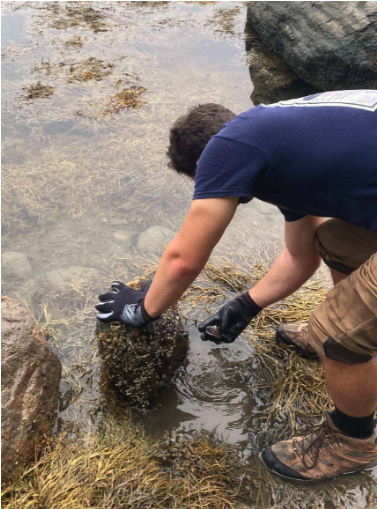
Our students also began thinking about where they might fit within problems like these.
One wrote that the experience strengthened their desire to pursue marine biology and generate the long-term evidence needed to guide conservation decisions. Another student, interested in science communication, reflected that participating directly in scientific research helped them better understand “the people whose work I want to elevate before the public as a communicator.”
I found that especially meaningful.
An experience like this can deepen students’ knowledge of marine ecology, but it can also help them recognize that complex problems need people doing different kinds of work. Research, conservation, communication, and community engagement all contribute something different.
Students did not all leave Maine imagining the same future. They left with a clearer sense of the many ways their own interests and abilities might matter.
Preparing for the Journey, the Content, and Each Other
The course also reminded me how much field-based learning depends on the human environment we create around the academic one.
Students came to Maine with different levels of experience. Some were Marine Biology majors; others brought backgrounds and perspectives from outside the program. For some, the trip was their first experience traveling far from home.
We realized that preparing them meant preparing them for three things: the journey, the content, and each other.
Before we left, students received a detailed itinerary and resources explaining what they needed to know. An unlimited-attempt pre-trip quiz gave them a chance to identify gaps in their knowledge and return to the material before the course began.
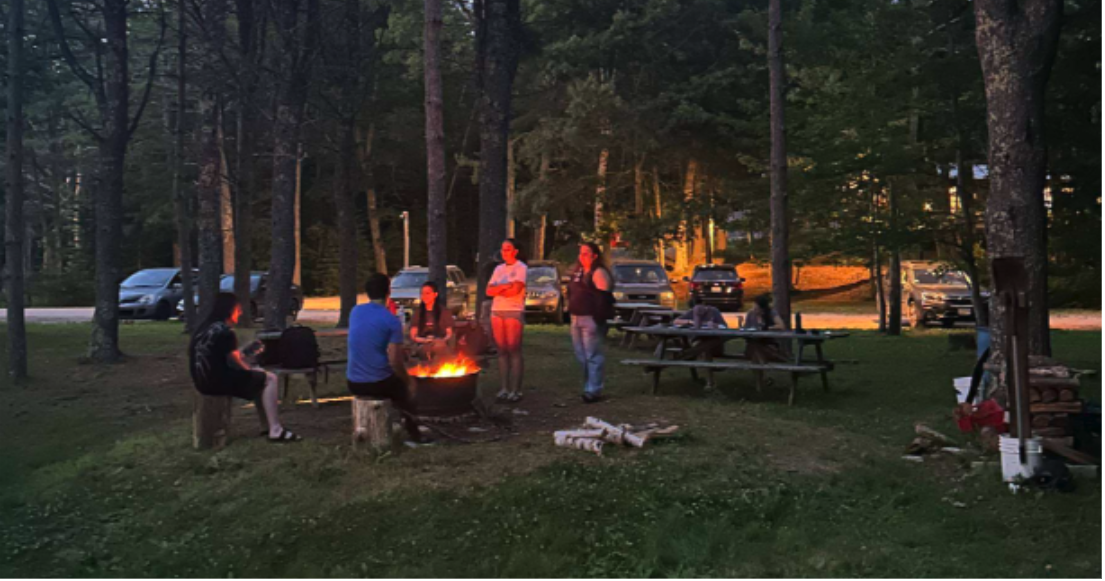
We also met several times as a group so students could ask questions, talk through expectations, and begin getting to know one another. A group chat that initially served as a place for practical questions eventually became a collection of trip memes and stickers. For 12 days, students were not simply attending the same class. They were traveling together, working in the field together, reading and discussing together, and figuring things out together. That human work was part of the course, too.
When the Plan Changes
No amount of preparation, however, can make a field course predictable.
An airline lost one student’s bag. Weather forced us to reschedule a birding tour. And we discovered—too late—that we had planned all of our sampling events around the wrong tides.
By the end of the trip, we were on the 10th edition of the syllabus.
Those moments created their own kind of learning.
The conditions changed, so we changed the plan. What mattered was not pretending that everything had gone as intended, but paying attention to what was actually happening and figuring out what to do next.
That is part of working in the field, but it is also part of working in the world. Real problems rarely arrive neatly bounded, with all the necessary information and a predetermined solution. They ask us to revise our assumptions, respond to changing circumstances, and work with other people whose knowledge and strengths may differ from our own.
A classroom without walls gives students a chance to practice exactly that.
There’s Always Something New
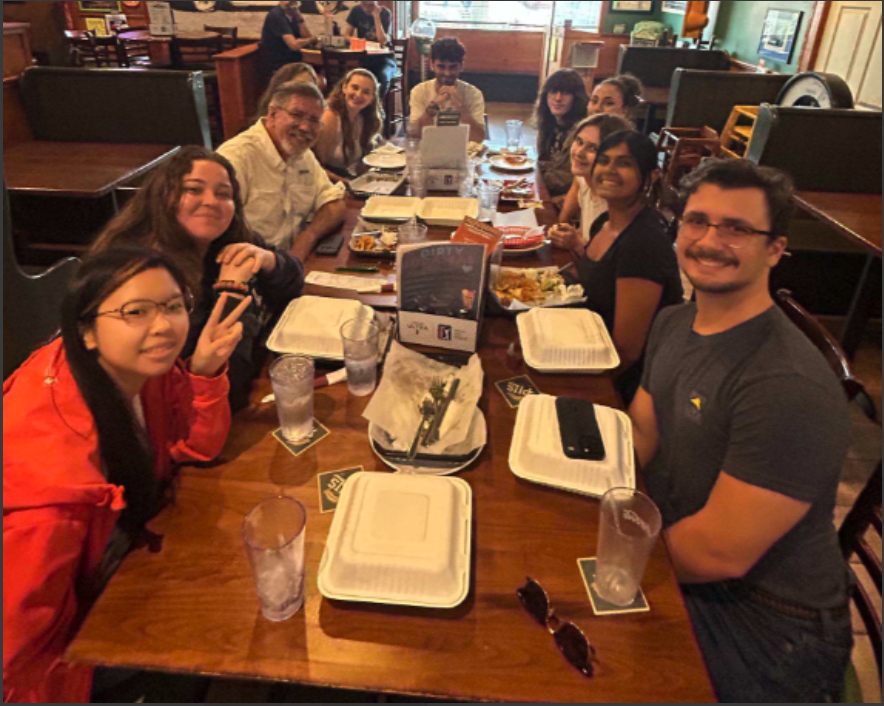
The course we experienced in Maine looked very different from the one we had planned. So did some of my thinking about what students can learn when we take the classroom into the world. I returned with a deeper understanding of the marine ecosystem, a deeper connection to the students I worked with, and a renewed appreciation for learning that asks all of us to pay attention, adapt, and work alongside one another. That made me curious about Paul. After 27 years at Rollins and many trips like this one, did he still find something new in leading them? When I asked him, he smiled. “There’s always something new.”
I am grateful to Dr. Paul Stephenson for showing me the ropes in Maine; Dr. Fiona Harper for sharing her insights and helping plan the trip; Rollins International Programs for managing many of the student-facing logistics; and the Ielene B. Morrow Fund for providing financial support that helped students participate in the field course.