Jason Surian & Sarah Hunt-Barron | Department of Education
As teachers, we sometimes face a moment when we realize our training, experiences, and knowledge have not adequately prepared us for a situation. Despite having over 40 years of collective experience as teachers, we welcomed the invitation last fall to attend a mid-semester support luncheon for faculty working with students on the autism spectrum. The opportunity to sit with colleagues from across the institution to share questions, experiences, and ideas as we navigate teaching all students well could not have come at a better time.
The conversation and resources shared in that space were valuable, and we returned in the spring to the next support lunch, eager to learn more. This summer, we chose to join an Endeavor Center book study on the topic as we continued our learning.
What began as a single invitation to a lunchtime discussion became something more: an opportunity to question, learn, and reconsider our current practice—and how the spaces we create and the practices we use can better support our neurodivergent scholars.
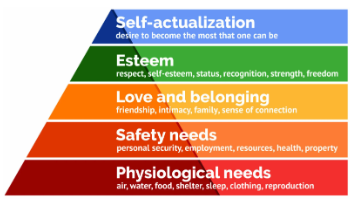
Maslow’s Hierarchy of Needs reminds us that a sense of safety matters for learning. When we feel threatened or overwhelmed, our attention can shift toward managing that threat rather than engaging in the cognitive work in front of us.
None of this is new, and as teachers, we all strive to create positive classroom communities. But through the lens of these opportunities to talk with colleagues about the diverse needs of the learners in our classrooms, we began to see more clearly how the spaces we create—both the physical spaces and the temporal spaces around transitions in our classes—can shape the teaching and learning experience for us all.
Physical Space
Physical space can impact our feelings of safety. As Sarah has gotten older, for example, she has found that she does not enjoy enclosed spaces, and each year her level of concern over stepping into elevators grows. She understands intellectually that the elevator is perfectly safe and that she will not be trapped in a metal tube, but she still has to use her best emotional-regulation strategies to get herself to step into that small space for the journey to the next stop.
For students with autism, classroom spaces can create something like Sarah’s “elevator of horror.” Although we do not always control the spaces assigned to us, we can think about the organization of those environments and how we might help all students feel comfortable and productive.
This year, we started being more intentional about the physical spaces within our classes. If you wander into CSS 222 before 9 a.m. Monday through Thursday, you may see one of us rearranging tables. When possible, we pre-set the furniture into groups of four.
What we see in these groups is encouraging. After walking into class, students take a seat and begin having conversations with the people across from them rather than defaulting to their devices as time-fillers. These conversations are wide-ranging and varied, with students talking about everything from upcoming internships to what they did last night. We see students begin to “click” with others in the class and find shared interests outside of class.
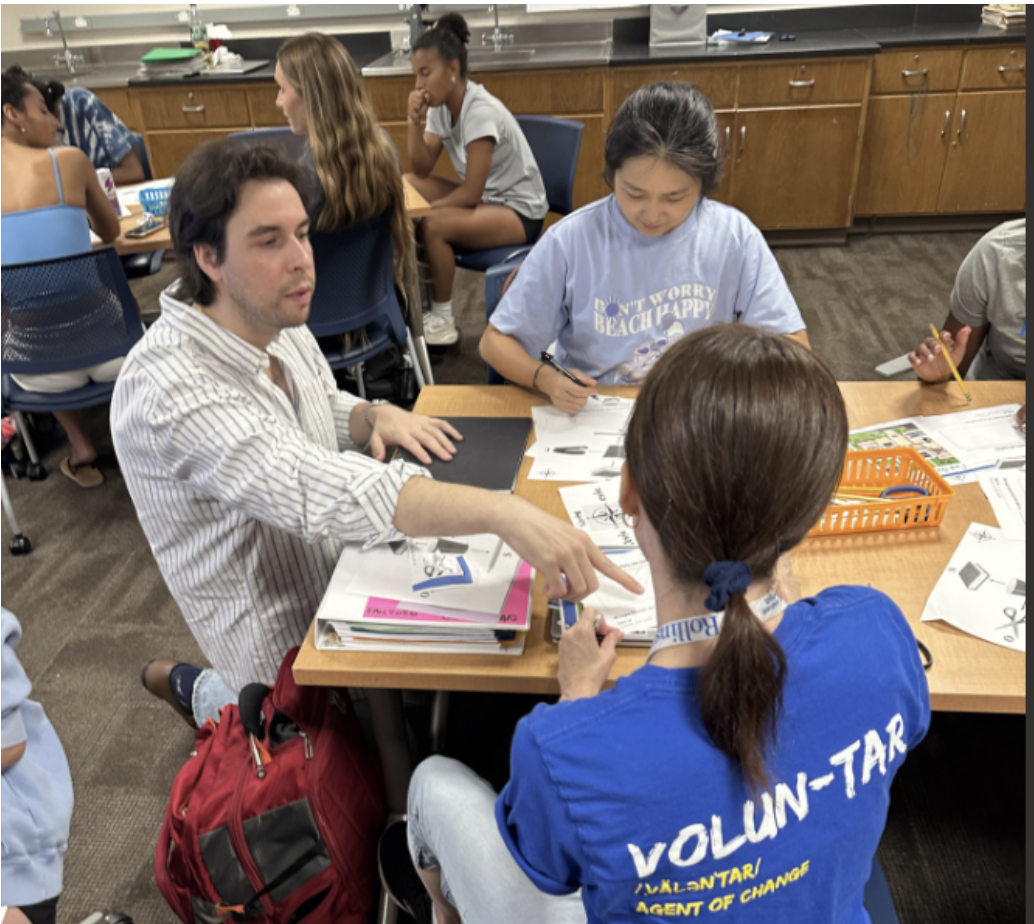
For some students with autism, a classroom design that provides limited opportunities for interaction can create an additional barrier to forming connections. The simple act of redesigning the space for group work and collaboration can remove one barrier: students are naturally seated with peers with whom they can collaborate.
Of course, we do not always have the luxury of rearranging furniture—so we have both asked the Registrar’s Office for lists of available spaces and, when possible, moved to rooms that better meet our needs. When we cannot pre-set groups, we use simple grouping strategies so that students can find a group or partner without fear of rejection.
The strategies look a little different in each of our classrooms. Walking into Sarah’s class, you may be handed a playing card, asked to choose a popsicle stick, or given a colored index card. Jason uses social-media groups: TikTok, Snapchat, Instagram, and, of course, our generational favorite, Facebook. When it is time to work collaboratively, students find their matches and work begins. These simple tools make grouping productive and painless rather than an exercise in social capital. They remove the moment when students have to scan the room, approach peers, negotiate entry into a group, or risk being left out.
We have also begun thinking differently about the materials and choices we provide.
Although there are often benefits to collaboration, Sarah now offers a “go it alone” option for some group assignments, enabling students to work independently when the social demands of collaboration would compete with the learning the assignment is intended to produce. Few students have chosen the option, but it is available.
Both of us also try to make classroom materials readily accessible. Walking into Jason’s classes, you may see what looks like an art project in progress. Students sit at tables with a plastic caddy in the center containing all the materials an earnest student might need—Post-its, highlighters, glue sticks, and even fidget toys for students who like to have something in their hands. As students work through material in class, they can simply pull what they need from the caddy.
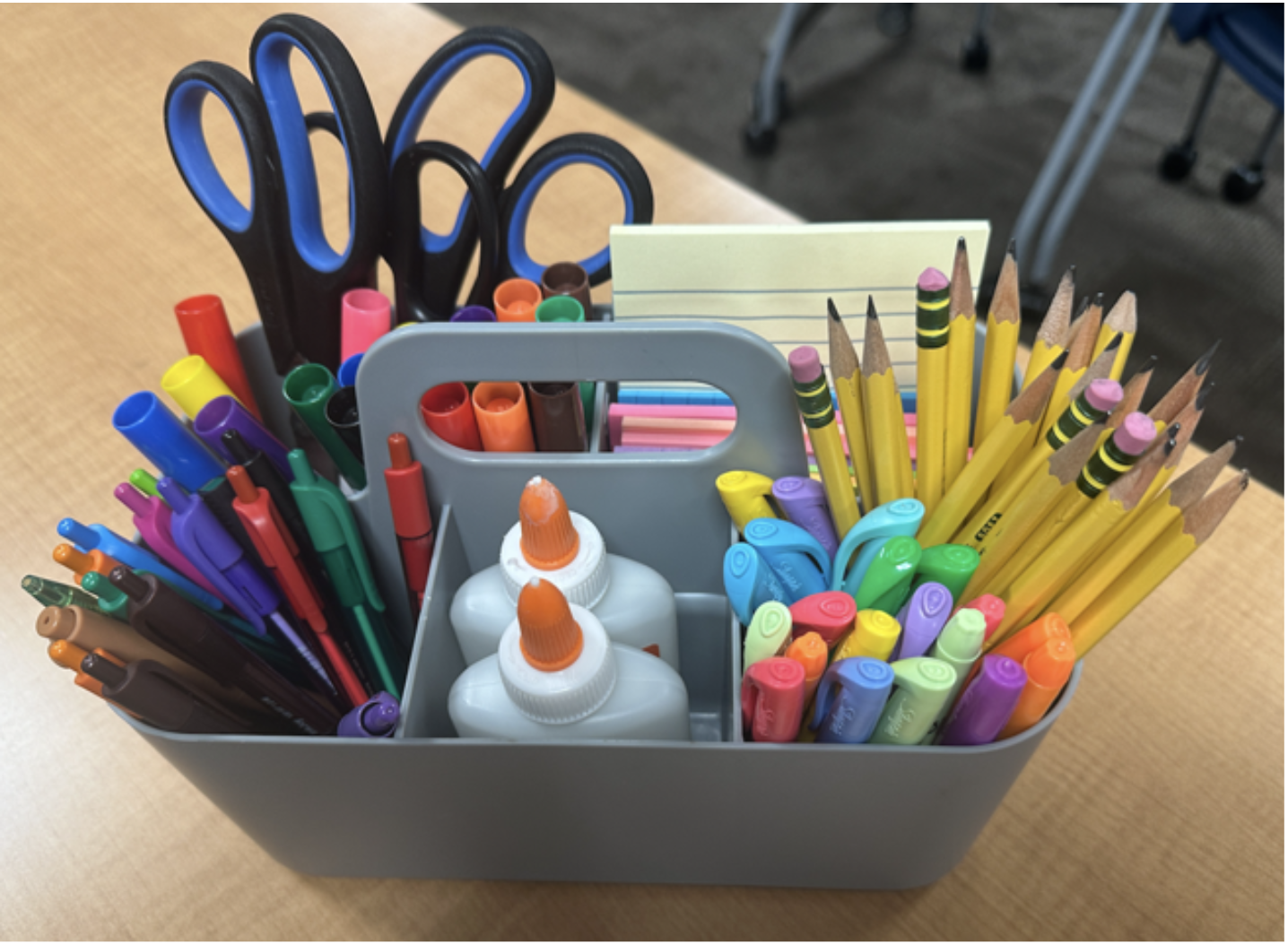
The caddies may look playful, but their purpose is practical. For students who are already devoting significant attention to regulating sensory input, navigating social interactions, or keeping track of multiple steps, locating materials can become one more demand on executive functioning. Bringing materials to students removes that small barrier, giving them more capacity to focus on the intellectual work in front of them.
Temporal Space
Transitions can be among the toughest parts of teaching and learning as we move from one topic or activity to another. Helping students shift smoothly—mentally or physically—requires intentional strategies. We have each been experimenting with ways to make those transitions and the rhythm of class more predictable, reducing the cognitive and emotional work of figuring out what comes next and allowing students to focus more fully on the learning itself.
This year, Sarah began using two-step directions more intentionally during transitions. Rather than introducing all of the logistics and expectations for a new activity at once, she sequences the transition so students can complete one or two immediate steps before taking in the next set of directions.
For example, before students begin a collaborative activity, Sarah might first ask them to move into their groups and gather the materials they need. Once that transition is complete, she introduces the intellectual task itself, walking through the directions step by step while also making them available visually on a slide or handout. The goal is not to simplify the work, but to reduce the executive-functioning demands surrounding it so that students can direct more of their attention to the work that matters.
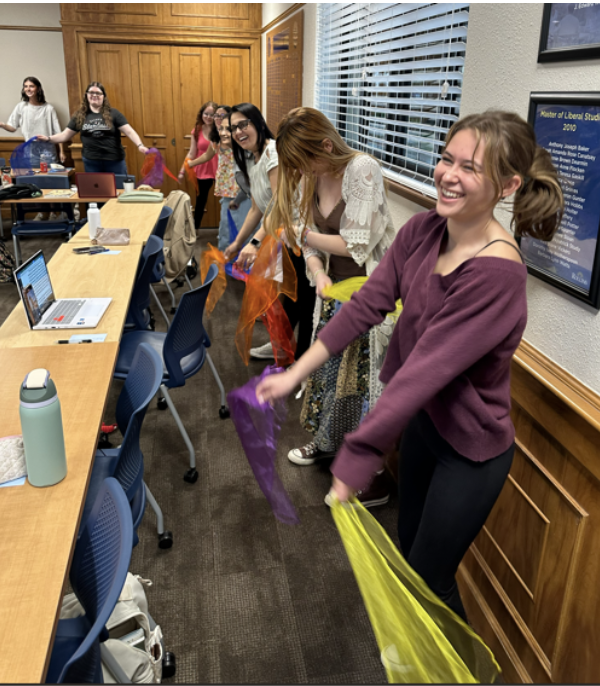
Jason builds predictability into the rhythm of his classes in other ways. During his longer class meetings, he intentionally builds in brief changes of pace—what he calls “brain breaks”—that give students opportunities to move, reset, and refocus. For example, “Stick It Up Tic Tac Toe” combines vocabulary review with movement and a little chaos: students answer a vocabulary question correctly, then toss a sticky ball at a wall-sized tic-tac-toe grid to claim a square for their team.
Activities like this may look silly from the outside, but the silliness is not the point. Short opportunities for movement, play, and a change in cognitive demand can give students a chance to regulate, reset their attention, and re-enter the academic work. For students who expend substantial energy managing transitions, attention, sensory input, or emotional regulation, that reset can be particularly valuable.
Each of Jason’s classes also begins with an engagement or reconnection activity and ends with a conversational recap of the learning and expectations for the next time together. Consistent routines can lessen worry, increase motivation, and promote self-confidence in the coursework. They give students a structure they can rely on week to week, reducing the executive-functioning work of repeatedly figuring out what is happening, what is expected, and what comes next.
Station learning has also been front and center in Jason’s courses this semester, intentionally using space to support different ways of learning. In one version, students might rotate through stations that ask them to examine the same classroom scenario through different educational theories, applying each framework, comparing what it helps them notice, and considering its limitations. The same structure could translate easily across disciplines: different stations might ask students to interpret a case, text, problem, or set of evidence through several competing frameworks. Because each station has a defined task, clear directions, and a predictable amount of time, students know where to go, what to do, and what comes next.
The predictable rotation model, clear expectations, and opportunities for movement and choice can make learning more accessible while allowing students to engage in ways that work for them—whether independently, in smaller groups, or with different kinds of materials. What can look at first like a more elaborate classroom set-up is really another way of externalizing some of the planning and organization students might otherwise have to manage themselves.
Adjustments Help Everyone
These relatively small adjustments to our instructional spaces can benefit many students, not only those who identify as neurodivergent. Purposefully setting up our spaces provides clarity in communication and removes barriers to disciplinary thinking.
When students step into a space arranged for their learning, we see a community of learners emerge. Students become more invested in the content of the class as well as in the lives of their classmates.
Students come to Rollins for relationships. Our mission specifically points to innovation and community as guiding principles in an inclusive environment. Moving beyond traditional rows and rules takes thought and planning, but this work has centered our thinking around the students we teach and the power of inclusive practices.
Image Credit:
Maslow’s Hierarchy of Needs: https://www.simplypsychology.org/maslow.html
Brain break photo taken in Dr. Jason Surian’s class.